


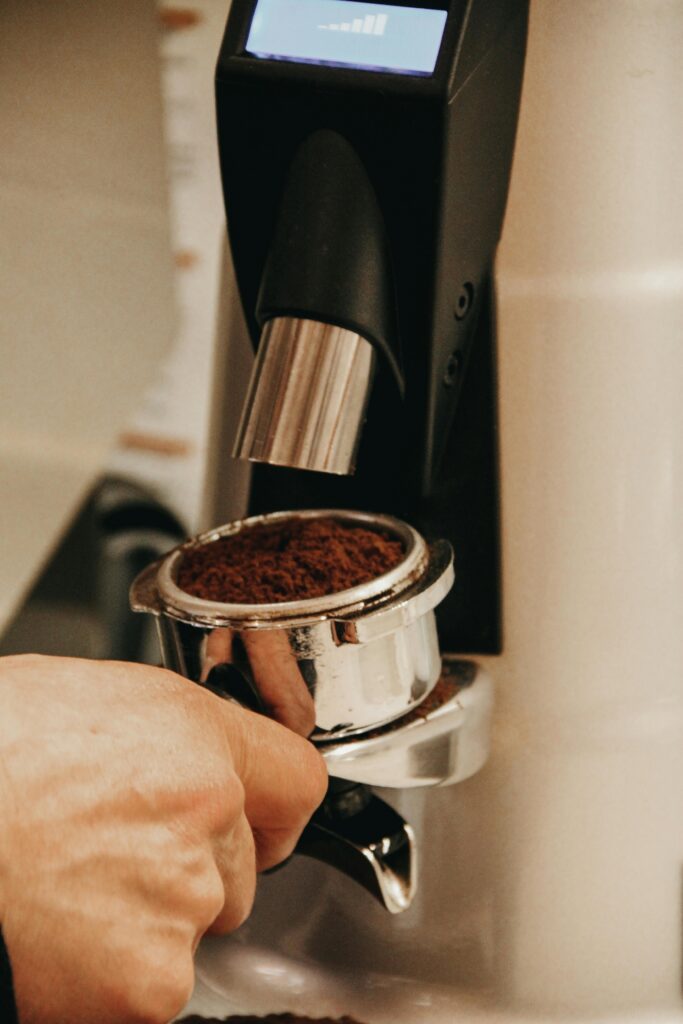
In the world of coffee, the line between a mediocre cup and a memorable experience is sometimes measured in microns. Specialty coffee is not defined solely by the exceptional quality of the bean, but by a technical mastery that transforms this potential into a gustatory reality. Officially, a coffee earns the “specialty” designation when it achieves a minimum score of 80 out of 100 points according to the Specialty Coffee Association’s evaluation protocol, and offers total traceability from the producer to your cup.
However, owning an exceptional bean is not enough. Without controlled extraction, the best coffee in the world will remain silent. It is this science of extraction—this alchemy between particle size, temperature, time, and ratio—that we will explore together. Whether you are an amateur barista or simply curious to optimize your morning ritual, this guide will give you the keys to elevate every single cup.
The Fundamentals: Terroir, Variety, and SCA Score
Before talking extraction, let’s start by understanding what creates the intrinsic excellence of a specialty coffee. Three fundamental pillars determine the flavor potential of a bean: terroir, botanical variety, and validation by the SCA score.
The Cupping Protocol: Objective Evaluation
The SCA score is not a simple subjective appreciation. It is the result of a rigorous cupping protocol, standardized worldwide and performed by certified Q Graders. During a cupping session, coffee is evaluated across ten specific criteria: fragrance/aroma, flavor, aftertaste, acidity, body, balance, uniformity, clean cup, sweetness, and overall impression.
Each attribute receives a score on a precise scale. Defects are deducted based on their intensity and frequency. A coffee that crosses the 80-point threshold enters the highly exclusive specialty coffee club, representing less than 10% of global production. Between 85 and 89 points, it is considered an excellent coffee. Beyond 90 points, the coffee is exceptional, sought after by competitors and the most demanding connoisseurs.
The Influence of Terroir
Coffee terroir encompasses all the environmental factors that shape the bean’s aromatic profile. Altitude plays a decisive role: between 1,200 and 2,200 meters, cooler temperatures slow down the maturation of the cherries, allowing sugars and organic acids to develop with greater complexity. This is why high-altitude coffees generally offer finer, more nuanced profiles.
Climate, soil (volcanic, clay, limestone), sunlight, and rainfall each contribute their own signature. An Ethiopian coffee grown on volcanic soil will express floral and fruity notes differently than a Colombian grown on clay soil.
Processes and Botanical Varieties
Post-harvest processing radically influences the final flavor profile. The natural process, where cherries dry whole in the sun, produces coffees with a generous body and intense fruity notes. The washed process, where mucilage is removed through water fermentation, reveals bright acidity and remarkable aromatic clarity. The honey process, sitting in between, retains part of the mucilage for a balanced profile.
Botanical varieties bring their own aromatic palette. Bourbon offers a natural sugary sweetness, Typica stands out for its elegance, while the mythical Geisha deploys floral notes of jasmine and bergamot that make it one of the most sought-after and expensive coffees in the world.
At JJ Looze, we select our coffees taking all these parameters into account, because we know that excellence begins long before artisanal roasting.
Grind Size: The Pillar of a Successful Extraction
You own an exceptional bean, scored at 86 points, grown at 1,800 meters altitude. Now comes the crucial moment: extraction. And it all begins with grind size—the particle size of the ground coffee.
Why is grind size so crucial? Because it determines two essential factors of extraction: the contact surface area between water and coffee, and the hydraulic resistance the particles offer to the flow of water.
A fine grind multiplies the surface area: more exposed surface means more soluble compounds extracted in less time. Conversely, a coarse grind reduces this surface area, requiring longer contact time to extract sufficient flavor. Hydraulic resistance, meanwhile, influences the speed at which water flows through the bed of coffee. A fine grind creates significant resistance, slowing the flow, while a coarse grind allows water to flow through quickly.
The equation is complex: you must find the equilibrium point where enough desirable aromatic compounds (sugars, fruity organic acids, complex aromas) are extracted without extracting too many undesirable compounds (bitter tannins, astringency). This is known as the optimal extraction zone, generally situated between 18% and 22% extraction (measurable with a refractometer via TDS – Total Dissolved Solids).
Grind uniformity matters just as much as average size. An inconsistent grind, with many “fines” (very small particles) and “boulders” (large pieces), will produce an uneven extraction: fines will be over-extracted (bitterness) while boulders will remain under-extracted (aggressive acidity). This is why grinder choice is decisive.
Reference Table: Grind Size by Extraction Method
| Method | Size (microns) | Brewing Time | Target Extraction |
|---|---|---|---|
| Espresso | 200–300 | 25–30 seconds | 18–22% |
| Moka Pot | 300–400 | 3–4 minutes | 18–20% |
| Pour-Over (V60, Chemex) | 400–600 | 2:30–4:00 minutes | 18–22% |
| Dripper (Kalita) | 500–700 | 3–4 minutes | 19–21% |
| French Press | 700–900 | 4–5 minutes | 18–20% |
| Cold Brew | 800–1000+ | 12–24 hours | 16–18% |
Fine Grind: Espresso Precision
Espresso demands the highest precision. With particles from 200 to 300 microns, we enter high-tech territory. At this grind size, pressurized water (9 bar) passes through the coffee in 25 to 30 seconds, extracting an intense concentrate of 25 to 35 ml.
Tolerance for error is minimal. A difference of a few microns can transform a balanced espresso into an acidic or bitter extraction. This is why professional baristas adjust their grind multiple times a day based on ambient humidity and coffee freshness.
For espresso, we recommend high-quality flat burr grinders. Flat burrs produce a more unimodal particle size distribution (narrow peak), essential for extraction uniformity under pressure. Professional models like the Mahlkönig EK43 or Baratza Forte are benchmarks, but more accessible options like the Eureka Mignon already offer excellent results for the demanding amateur barista.
The espresso machine also matters tremendously. A quality home machine must offer thermal stability (PID), consistent pressure, and a group head sized for homogeneous extraction. Brands like Lelit, Rancilio, or Rocket offer semi-automatic machines that allow true control.
Signs of optimal extraction: Thick, persistent crema with tiger striping, syrupy body, balance between sweetness and fruity acidity, long and pleasant aftertaste.
Medium Grind: Balance for Pour-Over Methods
Filter methods such as pour-over (V60, Chemex, Kalita Wave) operate with a medium grind of 400 to 600 microns. This range allows percolation extraction where water flows by gravity through the bed of coffee, generally in 2 minutes 30 seconds to 4 minutes.
The V60, with its 60° cone and spiral ribs, favors rapid flow. It requires a slightly finer grind (around 400–500 microns) and controlled pouring technique: initial blooming (30–40g of water to degas CO₂), followed by concentric circular pours to maintain stable temperature and uniform turbulence.
The Chemex, with its thick paper filter and iconic design, produces a cup of exceptional aromatic clarity. The filter retains more oils and fine particles, revealing the most delicate notes of the coffee. A slightly coarser grind (500–600 microns) works best for the Chemex filter to prevent clogging and maintain a reasonable drawdown time.
These methods celebrate the complexity of specialty coffee. They make it possible to distinctly perceive the floral notes of an Ethiopian Yirgacheffe or the fruity nuances of a Kenyan AA. The transparency of the extraction reveals the terroir without masking it.
- Recommended ratio: 60g of coffee per liter of water (or a 1:16–17 coffee-to-water ratio).
- Water temperature: 92–96°C depending on origin and roast level.
Coarse Grind: Immersion and Cold Brew
At the opposite end of the spectrum, immersion methods like the French Press and Cold Brew rely on a coarse grind of 800 microns and up.
The French Press offers a radically different profile. Coffee and water coexist for 4 to 5 minutes without paper filtration. This full immersion extracts more oils and lipid compounds, producing a coffee with full, almost tactile body. A coarse grind is essential for two reasons: preventing fine particles from passing through the metal mesh (making the cup muddy) and controlling extraction to avoid the bitterness that quickly develops during immersion.
Cold Brew takes this logic even further. With a very coarse grind (900–1000+ microns) and an infusion at ambient or refrigerated temperature for 12 to 24 hours, you obtain a smooth concentrate, low in acidity, with pronounced chocolatey and caramelized notes. Cold extraction alters the chemical profile: fewer chlorogenic acids and volatile compounds are extracted, while more sugars and caffeine dissolve slowly over time.
Why this coarse grind? Because reduced surface area balances out the extended contact time. If you used a fine grind in long immersion, you would end up with a catastrophic over-extraction resulting in unbearable astringent bitterness.
Equipment: Conical Burrs vs. Flat Burrs
The debate between conical and flat burrs fascinates coffee aficionados. Beyond personal preference, there are genuine technical differences that influence your cup.
Conical Burrs: Versatility
Conical burrs operate with a stationary outer cone-shaped ring and a rotating inner cone. Coffee is ground through shearing and compression as it falls through the conical gap.
Advantages:
- Bimodal particle size distribution: a primary peak of target particles along with two minor distribution tails (fines and coarses)
- Less heat generated during grinding (preserving volatile aromatics)
- Generally quieter operation
- Excellent for all extraction methods, from espresso to French press
In-cup profile: Conical burrs tend to produce coffee with more body and tactile complexity. The presence of fine particles (even in small quantities) contributes to the extraction of lipid compounds that enrich texture.
Recommendations: Baratza Virtuoso+, Comandante C40 (reference manual grinder), Eureka Mignon Specialità.
Flat Burrs: Precision
Flat burrs consist of two parallel discs, one (or both) of which rotates. Coffee is ground by abrasion between the two flat surfaces.
Advantages:
- Highly tight unimodal particle size distribution: narrow peak with less dispersion
- Superior grind uniformity, which is particularly crucial for espresso
- More predictable and reproducible extraction
In-cup profile: Flat burrs emphasize aromatic clarity and flavor definition. Each note stands out with greater sharpness, as if boosting the resolution of an image. Ideal for revealing the complexity of a high-altitude specialty coffee.
Recommendations: Baratza Forte BG, Fellow Ode Gen 2, Mahlkönig EK43 (the Holy Grail used in competitions), Niche Zero (excellent quality-to-price ratio).
Which Choice to Make?
- For espresso: Prioritize flat burrs for their critical uniformity under pressure.
- For pour-over/filter methods: Both perform admirably; it comes down to taste preference (body vs. clarity).
- For versatility: Conical burrs offer more flexibility if you alternate between multiple methods.
The bottom line remains grind uniformity and micro-adjustment capability. An excellent conical burr grinder will always outperform a mediocre flat burr grinder, and vice versa.
Avoiding Errors: Under-Extraction vs. Over-Extraction
Even with an outstanding specialty coffee and a great grinder, extraction can fail. Let’s learn to diagnose and correct the two major issues: under-extraction and over-extraction.
Under-Extraction: When Potential Remains Unused
In-cup symptoms:
- Unpleasant, sour, almost vinegary acidity
- Light, watery body, lacking substance
- Flat, one-dimensional flavors
- Short, fleeting aftertaste
- Overall impression of “emptiness” or unfulfilled potential
Primary causes:
- Grind size too coarse (insufficient contact surface area)
- Water temperature too low (slowed extraction)
- Brew time too short
- Imbalanced coffee-to-water ratio (too much water)
- Coffee too fresh (less than 48h post-roast, CO₂ degassing incomplete)
Solutions:
- Fine-tune your grind progressively in small increments.
- Increase water temperature by 2–3°C.
- Slightly extend brew time.
- Increase coffee dose (more grams of coffee for the same water volume).
Over-Extraction: Excess That Ruins Everything
In-cup symptoms:
- Dry, astringent, harsh bitterness
- Persistent yet unpleasant metallic aftertaste
- Drying sensation on the palate
- Burnt or charred notes
- Subtler notes masked beneath intense bitterness
Primary causes:
- Grind size too fine (over-representation of micro-fines)
- Water temperature too high (excessive extraction of tannins)
- Brew time too long
- Imbalanced ratio (too much coffee for the amount of water)
- Excessive agitation (over-turbulent pour)
Solutions:
- Coarsen your grind setting progressively.
- Decrease water temperature by 2–3°C.
- Shorten brew time.
- Slightly reduce coffee dose.
- Pour water more gently with less turbulence.
The Refractometer: Objective Measurement
For purists seeking to remove subjectivity, a refractometer measures TDS (Total Dissolved Solids) as a percentage. Combined with your brew ratio, it calculates extraction percentage.
- Optimal zone: 18–22% extraction, with a TDS of 1.2–1.5% for filter methods, and 8–12% for espresso.
Yet even without a refractometer, your palate remains your best tool. With practice and attention, you will learn to identify these imbalances and adjust your technique accordingly.
Quick Diagnostic Table
| Issue Detected | Grind Adjustment | Temperature Adjustment | Time Adjustment |
|---|---|---|---|
| Harsh acidity, thin body | Finer | +2–3°C | +15–30 sec |
| Dry bitterness, astringency | Coarser | -2–3°C | -15–30 sec |
| Lack of body | Slightly finer | Stable | +10–20 sec |
| Flat, undefined notes | Check coffee freshness | Stable | Test ±30 sec |
Conclusion: Mastery is a Journey, Not a Destination
Specialty coffee embodies excellence at every stage, from terroir to your cup. But this excellence only fully manifests when extraction technique is mastered. Understanding grind size, selecting the right equipment, and diagnosing extraction imbalances are skills developed through practice and curiosity.
At JJ Looze, we select coffees validated by the SCA scoring system that merit this technical care. Our artisanal roasting honors the hard work of producers by revealing the bean’s potential without masking it. Your role, as an enlightened enthusiast, is to complete this journey by extracting those aromas with precision.
Do not be afraid to experiment. Every coffee responds differently depending on its origin, process, roast level, and freshness. Keep a brew journal: note the grind size used, ratio, brew time, and above all, your flavor impressions. That is how you will refine your craft until every cup brings you closer to perfection.
Specialty coffee is not reserved for an elite. It is an open door to a world of flavor, precision, and shared pleasure. Now that you have the keys, it’s your move. Your perfect cup awaits.